
On September 22, 2025, Kolkata witnessed one of the most devastating weather events in its history — the Kolkata Cloudburst 2025. Within just a few hours, the city recorded unprecedented rainfall, overwhelming its drainage systems and plunging entire neighborhoods under water.
For millions of residents, this was not just another monsoon downpour but a full-scale urban disaster that exposed the fragility of India’s metro cities against climate change and poor urban planning.
The Kolkata Cloudburst 2025 is now being compared to Mumbai floods of 2005 and Uttarakhand cloudbursts. It has sparked national debates about India’s disaster preparedness, urban infrastructure, and the increasing risks posed by climate change-driven extreme weather events.
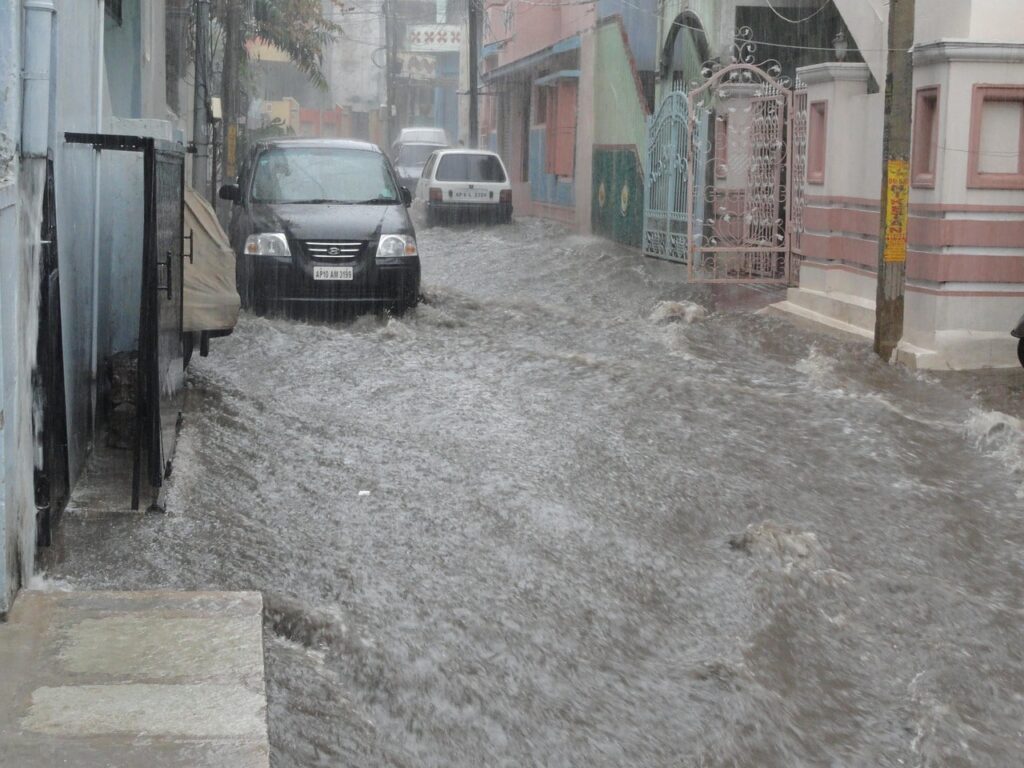
Timeline of Events: What Happened in Kolkata Cloudburst 2025?
The Kolkata Cloudburst 2025 began unexpectedly in the early morning hours. Meteorological reports confirmed that nearly 250 mm of rainfall fell within just four hours — a staggering volume for a city already struggling with poor drainage and unchecked urbanization.
• Early Morning (5:30 AM – 8:00 AM): Torrential rain lashed the city, flooding low-lying areas instantly.
• Morning Rush Hour (8:00 AM – 10:00 AM): Major roads and metro lines were submerged, paralyzing transport. Thousands were stranded in buses, trains, and even inside their homes.
• Afternoon (10:00 AM – 2:00 PM): The rainfall intensity peaked, leading to breaches in drainage canals and overflowing of lakes.
• Evening (Post 6:00 PM): Relief operations began as the NDRF and disaster management teams entered the city.
By nightfall, the Kolkata cloudburst impact was felt across all sectors of life — from electricity outages to hospitals struggling with emergency patients.
Causes of the Kolkata Cloudburst 2025
The Kolkata cloudburst 2025 causes can be traced to multiple interlinked factors:
- Climate Change and Extreme Weather: Scientists blame warming oceans in the Bay of Bengal for fueling hyper-intense localized rainfall.
- Urban Heat Island Effect: Rapid urbanization has raised city temperatures, amplifying convective rainfall.
- Poor Drainage and Encroachment: Kolkata’s outdated drainage network could not handle such sudden water volumes.
- Unplanned Urban Growth: Construction over wetlands and natural water bodies eliminated the city’s natural buffers against floods.
The event is a grim reminder that climate change is no longer a distant threat but an everyday reality for India’s cities.
Impact of the Kolkata Cloudburst 2025
The impact of Kolkata Cloudburst 2025 has been catastrophic, disrupting daily life and exposing systemic weaknesses:
- Human Impact
• Over 100 lives lost due to electrocution, collapsing walls, and drowning.
• Thousands displaced as floodwaters entered homes in neighborhoods like Lake Town, Salt Lake, and central Kolkata. - Infrastructure Collapse
• Metro services suspended.
• Dum Dum airport operations disrupted for hours.
• Major roads like EM Bypass and Howrah Bridge approaches submerged. - Economic Losses
• Early estimates suggest damages worth ₹12,000 crore to businesses, transport, and housing.
• Stock of small businesses ruined.
• E-commerce and logistics halted. - Public Health Crisis
• Floodwater contamination raised fears of cholera, dengue, and malaria outbreaks.
• Hospitals struggled with power cuts and overflowing emergency wards.
Social Media and Public Reaction
The Kolkata Cloudburst 2025 trended instantly on social media platforms like Twitter (X) and Instagram.
• Videos of buses floating in water went viral.
• Citizens criticized the West Bengal government’s lack of preparedness.
• Memes compared the city to “Venice under rain.”
The flood became not just a climate disaster but also a political flashpoint, with opposition leaders questioning infrastructure spending and disaster response readiness.
Government and NDRF Response
The government response to Kolkata Cloudburst 2025 included:
• Deployment of 10 NDRF teams with boats and high-tech rescue equipment.
• Army engineers assisting in pumping out water from critical areas.
• Setting up over 100 relief camps for displaced families.
• Distribution of food packets, medicines, and emergency lighting.
However, experts say the response was reactive rather than proactive. The disaster showed that India’s disaster management needs long-term planning rather than temporary relief measures.
Lessons for India`s Urban Planning
The Kolkata Cloudburst 2025 lessons go beyond the city itself. Every metro city in India — Delhi, Mumbai, Chennai, Bengaluru — is at risk of similar disasters. Key lessons include:
- Revamp Drainage Systems: Replace outdated pipelines and canals with smart stormwater management.
- Protect Wetlands and Water Bodies: Stop encroachment and restore natural flood buffers.
- Climate-Resilient Infrastructure: Roads, metros, and airports must be designed for heavy rain events.
- Disaster Preparedness Education: Citizens must be trained for evacuation and first response.
Global Comparisons
The Kolkata Cloudburst 2025 is not an isolated event. Similar disasters have struck elsewhere:
• Pakistan Floods 2022 → killed over 1,700 people.
• Germany Floods 2021 → billions in damages despite advanced infrastructure.
• Mumbai Floods 2005 → a lesson India has still not fully learned.
These examples show that urban flooding is a global crisis, but in India, the risk is higher due to population density and weaker infrastructure.
Long – Term Implications for Disaster Management in India
The long-term impact of the Kolkata Cloudburst 2025 will likely include:
• Policy reforms on urban planning and drainage systems.
• Stronger climate action policies at both central and state levels.
• Increased funding for smart city climate resilience projects.
• Greater pressure on local governments to integrate climate risk in city planning.
If India does not act now, more Kolkatas will drown in the coming decade.
Conclusion
The Kolkata Cloudburst 2025 is a wake-up call for India. It exposed not just the fury of nature but the failures of governance, planning, and preparedness. While relief work will eventually restore normalcy, the bigger question remains — will India learn the lessons this time?
If not, the next cloudburst could hit any Indian city, and the consequences could be even deadlier.
The message is clear: climate resilience must become India’s top priority.