
The year 2025 has been full of astronomical wonders, and the solar eclipse on September 21, 2025, is one of the most anticipated events. This is the last solar eclipse of the year, making it an important celestial occurrence for astronomers, students, and curious sky-watchers across the world.
If you’re preparing for competitive exams like UPSC, SSC, Banking, or State PCS, this topic is also highly relevant because questions on eclipses often appear in general science and current affairs.
In this detailed article, we’ll explain what a solar eclipse is, the exact timings, visibility zones, myths vs. facts, and the significance of this eclipse.
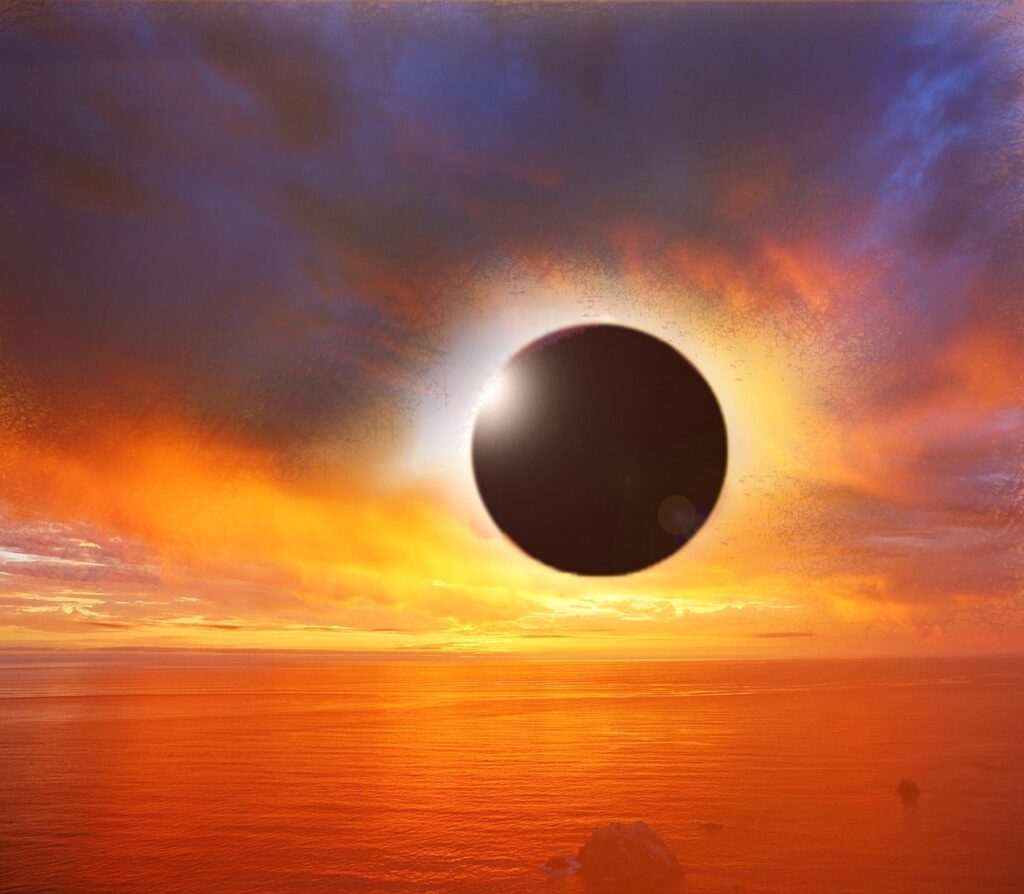
What is a Solar Eclipse?
A solar eclipse occurs when the Moon passes between the Earth and the Sun, blocking sunlight partially or fully.
• Total Solar Eclipse: Moon completely covers the Sun.
- Partial Solar Eclipse: Only part of the Sun is covered.
- Annular Solar Eclipse: The Moon covers the center, leaving a “ring of fire.”
The September 21, 2025 event is a partial solar eclipse.
Date & Exact Timings of September 21, 2025 Eclipse
According to NASA and astronomical predictions:
- Partial Eclipse Begins (First Contact): 17:29 UTC
- Greatest Eclipse: 19:41 UTC
- Partial Eclipse Ends (Last Contact): 21:53 UTC
In Indian Standard Time (IST):
- Begins: 10:59 PM (Sept 21)
- Maximum: 01:11 AM (Sept 22)
- Ends: 03:23 AM (Sept 22)
However, this eclipse will not be visible in India.
Where will the Eclipse Be Visible?
The path of this eclipse mainly covers the Southern Hemisphere:
- Australia (Eastern cities like Sydney, Brisbane, Melbourne will see a partial eclipse).
- New Zealand (clear visibility).
- Antarctica (partial visibility).
- Pacific Ocean & South Atlantic Ocean (widest coverage).
Not Visible In:
- India
- Europe
- Africa
- North America
- Middle East
How to Safely Watch a Solar Eclipse
It is extremely dangerous to look at the Sun directly during an eclipse.
- Use ISO-certified eclipse glasses.
- Use a solar filter if using telescopes or cameras.
- Never use ordinary sunglasses.
- Indirect viewing methods (like pinhole projectors) are safe.
Myths vs Facts About Solar Eclipses
Solar eclipses have long been surrounded by myths, especially in India. Let’s bust some:
•Myth: Eating food during an eclipse is harmful.
Fact: There is no scientific
evidence; it’s completely safe.
•Myth: Pregnant women should not step outside.
Fact: No scientific link exists. Safety comes from avoiding direct sunlight without protection.
•Myth: Eclipse brings bad luck.
Fact: Eclipses are natural celestial events with no impact on destiny.
Scientific Significance of this Solar Eclipse
- Helps scientists study the Sun’s corona.
- Useful for astronomy students and researchers.
- Raises public interest in space science.
- Provides new data for refining lunar and solar models.
Cultural and Religious Significance
•The date coincides with Mahalaya Amavasya / Pitru Paksha, a period of spiritual importance in Hindu tradition. But because the eclipse won’t be visible in India, many traditional observances (like Sutak or certain restrictions) aren’t applicable.
•Eclipses often carry astrological significance; people consult rituals or beliefs, even if scientifically the event has no effect on day-to-day life.
Why Important for Competitive Exams?
• As the last solar eclipse of 2025, this event is being widely covered by scientific, news, and education outlets. It’s likely to appear in General Awareness / Science & Technology sections in exams like UPSC, SSC, etc.
- Questions may ask about date, visibility, definition of a solar eclipse, Sutak tradition, or how to safely observe.
- It’s a good practice topic: combines astronomy, calendar, Indian tradition + geography + science.
Facts to remember:-
- Date: 21 September 2025
- Type: Partial SolarEclipse
- Not visible in India
- Timings in IST: 10:59 PM– 03:23 AM
- Eclipse-related science (umbra, penumbra, corona) are exam hot topics.
Conclusion
The solar eclipse of September 21, 2025, is the last solar eclipse of the year, visible mainly from Australia, New Zealand, and parts of the Southern Hemisphere. Although not visible in India, it remains an important scientific and educational event.
For the general public, it’s a reminder of the magnificent relationship between the Earth, Moon, and Sun, while for exam aspirants, it’s an essential current affairs and science topic to remember.
Whether you’re an astronomy enthusiast or a student preparing for exams, this eclipse offers knowledge and inspiration beyond the night sky.